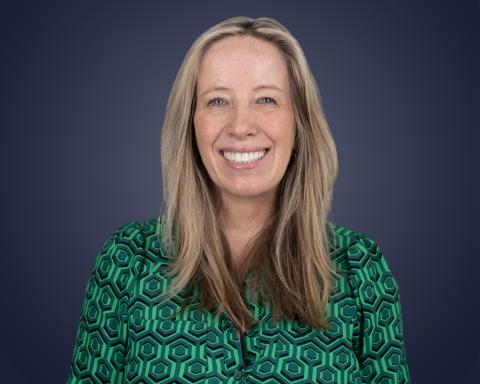
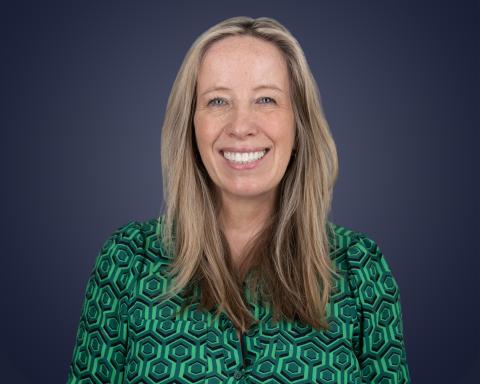
“They will hang together, those four kids,” says Claire Enders, a media analyst who has tracked the Murdoch empire for decades. “They don’t need the money.”

She expects the future of weak legacy assets, including the newspapers in the UK and Australia, will be the real question for the next generation. “Everyone understands how Rupert feels, but no one else is going to pay for that,” she says.

“Digital advertising is more valuable in the US,” explained Abi Watson, a media analyst at Enders Analysis. “The US is much richer.” Additionally, because the dollar has grown against the pound in recent years, American revenues have become more valuable to UK companies.

“Part of it is a numbers thing,” Watson added. “There are not going to be enough people that you are going to reach in the UK to offset the decline in newsstand sales, even if your business has subscriptions. [US expansion is] a necessity.”


Claire Enders, a media analyst who liaises with the government on broadcasting policy, argued that Channel 4 would reinvest profits made from selling shows into new content. “In a way, it would be more beneficial for Channel 4 to retain and reinvest rights than automatically give them away to producers who don’t all require that kind of assistance,” she added.

Amazon, NBCUniversal, Disney and Discovery have all announced their own ventures in so-called t-commerce, but experts aren’t convinced any of this tech is going to pay for streamers' own programme shopping. “These are all pretty niche opportunities – normal product placement is a nice addition to have, but it hardly drives the businesses of studios or broadcasters,” says Tom Harrington, analyst at Enders Analysis. “This technology feasibly extends that segment a bit but doesn't really combat the real limitations – which are regulation and the audience's tolerance for product placement.” 

When it comes to rating the show’s success, Barb figures are pointless. “There are all sorts of metrics – reaching underserved demos, retaining uncertain subs a bit longer, getting some users to log on to their service instead of another – that feed into whether Netflix sees the show as a success,” explains Tom Harrington, analyst at Enders Analysis.

Netflix, he stresses, thinks globally. The Netflix audience is still dominated by the USA, where it has 67 million subscribers, followed by Brazil (15m), UK (14m), Germany (13m), France (10m) and Mexico (10m). “The Royal family is IP that travels well, along with the advantage from the thematic tie-in that they’ve done with the recent series of The Crown,” Harrington explains.

But when all is said and done — provided Qatar maintains a safe environment through to Sunday — “they have absolutely pulled it off,” says Claire Enders, founder of leading London-based media consultancy Enders Analysis.

“They have put Qatar on the map of the world and everyone in the world knows where they are and everybody has a more positive view of Qatar than they had before, for sure."

“They established beIN all over the Middle East and in France, and really built an incredible amount of Qatar brand recognition,” said Enders, pointing out that Qatar “certainly went at it ready to spend enormous sums,” given that over the years “the amount they’ve lost [on beIN] is in the many billions.”  

Jamie MacEwan said cinema continues to be relatively “recession proof”, with larger scale Hollywood hits becoming more important than ever before.

MacEwan said this was likely to bolster “higher-end” experiences, such as Imax or Curzon, with movies being seen as more of a “treat”.


For this reason, he said there were more “reasons to be cheerful” as head into 2023, with a roster of delayed hits set to be released