Financial Times

10 March 2017

Tom Harrington was quoted in an article on Netflix, who seeks for a subscriber boost due to the increased competition with Amazon and Sky on local content. Tom said “in terms of original content, it does seem like Amazon is a more concerted effort than Netflix. In India, they’re doing eight separate programmes. They’re really looking to localise their content rather than what could be considered window dressing”.

Financial Times

15 February 2017

Claire Enders was quoted in an article on the newspaper industry. As print's fortunes continue to decline, prominent publishers such as the New York Times are increasingly relying on their digital future. On both sides of the Atlantic publishers were reinvigorated by the globe-shaking news events of Brexit and the election of Donald Trump. Claire Enders says that while the trends in the UK and US mirror each other, many newspaper groups would have fared better had they not wasted so much money on new digital ventures. She added “The remarkable story in the UK is that more titles have not followed the Independent’s lead and gone digital only. There is still enough scale to keep newspapers going.”

Financial Times

8 February 2017

Douglas McCabe was quoted in an article on the book industry, where there are signs of a book renaissance all around. Waterstones, the UK book chain, returned to profit last year after suffering six years of losses. Sales of print books in the US rose by 3 per cent, while those of eBooks have fallen. Digital technology has not unleashed the same revolution in publishing that it has for music, television and news. The book, in digital or printed from, has been more stable than other kinds of media. Douglas said “we read books one at a time and each one takes us days”.

Financial Times

6 February 2017

Douglas McCabe was quoted in an article on the expansion of Axel Springer news service, Upday, from four to 16 countries in Europe, as the German media group accelerates its shift into digital publishing. Upday, it’s a news aggregator that uses human editors as well as an algorithm to select news stories, it was developed as part of an exclusive partnership with Samsung and launched in Germany, Poland, the UK and France last February. Douglas said that the outlook for app advertising was promising. Adding that “Publishers are able to charge a premium for app advertising because the user is more loyal and engaged than the mobile web audience, and it is a much less intrusive experience, so we see this as positive.”

Financial Times

30 January 2017

Douglas McCabe was quoted in an article on Bertelsmann, the German conglomerate, which owns 53 per cent, is looking to raise its stake in Penguin Random House. Especially after the UK professional publisher Pearson said it planned to sell its 47 per cent share in the company. However, it comes at a time when the digital revolution is utterly transforming traditional business models and rewriting the rule-book for industries, from music and media to travel and financial services. Moreover, when many believed publishing would also fall victim to digital disruption, Douglas said “the physical book market has turned out to be more resilient than anyone expected”.

Financial Times

26 January 2017

Claire Enders was quoted in an article on the Murdoch family, and the gradual transfer of power from Rupert Murdoch to his sons, James and Lachlan. The brothers will manage the Sky bid with the aim of avoiding the fate of the last offer they made for the company. Back in 2010, the family couldn’t have handled things much worse, according to Claire Enders. Claire points to the aggressive posture taken at the time, particularly by James, who in his 2009 MacTaggart lecture lambasted the BBC, calling the scale of its activities “chilling” and describing the regulation of UK broadcasting as “authoritarianism” that limited choice and freedom of expression. Claire says this disdain carried over into the first Sky bid a year later, with “hectoring” phone calls by the Murdoch camp to government ministers. It was, she goes on, “an extraordinary farce”. The bid this time has been made in less charged circumstances. There has been no antagonism towards Ofcom or the government and no backdrop of a criminal investigation. Claire said “the previous bid was highly politicised but this bid is very deliberately not politicised at all”. The Murdochs, she adds, “are being patient and understanding and they are not hectoring”.

Financial Times

12 January 2017

Douglas McCabe was quoted in an article on the UK newspaper crises, which is driving rivals collaboration in face of fast declining print advertising. Richard Desmond, who owns the Express newspaper group, and Simon Fox, Trinity Mirror chief executive, called on a potential merger. Douglas said “in these challenging times, newspaper owners are having to think the unthinkable. Consolidation is inevitable.”

Financial Times

6 January 2017

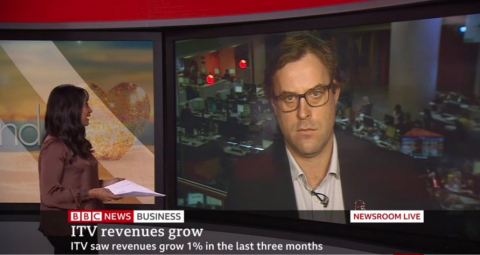
Claire Enders was quoted in an article on the future of ITV, as speculation grows over changes at the top of UK broadcaster. Claire said “this is a watershed year for ITV. This is the year that people realise that peak TV is behind us and while ITV has many different levers of revenue advertising will be tough. Adam has done a great job but the fact is ITV is in play because of the fall in the company’s share price and the value of sterling.”

The Times

19 December 2016

James Barford was quoted in The Times on UK broadband speeds following Ofcom's "Connected Nations 2016" report. James said "If you look at comparable countries such as France, Germany, Italy and Spain, we are doing extremely well. We have the fastest broadband speeds, the widest availability of superfast speeds and among the lowest prices", but added more could be done.

The Financial Times

14 December 2016

Francois Godard was quoted in an article on Vincent Bolloré’s intent on creating a southern European powerhouse in media and content, and Vivendi's Mediaset stakebuilding is another step towards that goal. Bolloré’s move on Italian broadcaster Mediaset has all the hallmarks of tactics honed over four decades of dealmaking: aggressiveness, audacity and creeping control. Francois said “it’s typical Bolloré. It’s very bold, it’s not a straightforward bid to buy a company and he’s obviously betting on dissent among the Berlusconi family.”